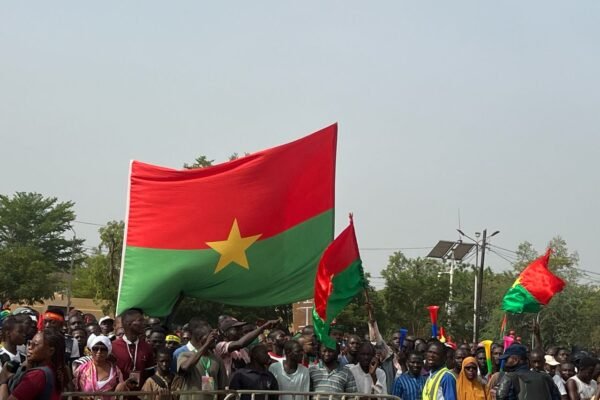


Any nation that seeks to endure must safeguard what holds it together: the values shared by its citizens. Without civic spirit, a sense of belonging and commitment to the common good, even the strongest institutions eventually falter. That is the importance of an initiative held on 18 November 2026 at the Ziniaré multipurpose hall, devoted to civic responsibility, citizenship, patriotic engagement, the culture of peace and the ideals of the Popular Progressive Revolution (RPP).
Organized by the Ministry of Justice with financial support from the National Office for Major Projects, the meeting is part of efforts to promote civic and patriotic values. It comes as Burkina Faso, facing major security and social challenges, seeks to consolidate the foundations of a cohesive society.
The choice of Ziniaré, a symbolic city of revolutionary commitment, is no accident: it recalls moments when the country’s youth were called to take responsibility for the nation’s future.
The values highlighted go beyond a simple catalogue of good intentions. Civic spirit means respect for common rules and public property. Citizenship means active participation in public life beyond voting. Patriotic engagement means readiness to serve the country, including in national defense. The culture of peace means resolving conflicts through dialogue rather than violence. The RPP ideals refer to a vision of social justice, sovereignty and collective progress.
For Burkinabè youth, these values are not imported abstractions. They are rooted in national history and the struggles that shaped the country. Passing them on means giving them concrete content: a young person who refuses corruption shows civic spirit; one who joins a local development association exercises citizenship; one who enlists in the defense of the homeland embodies patriotic engagement.
The National Office for Major Projects’ support gives the initiative material and symbolic weight, suggesting that promoting civic values is not a luxury for peacetime but a national priority deserving resources.
The Ziniaré meeting raises an essential question: how can these values become daily reflexes? The answer lies in repetition, example and institutional anchoring. By placing these ideals at the heart of education and public life, Burkina Faso is betting on its youth as the main vehicle for transformation—a demanding wager, but the only one that guarantees a strong and lasting national identity.